InkSmithery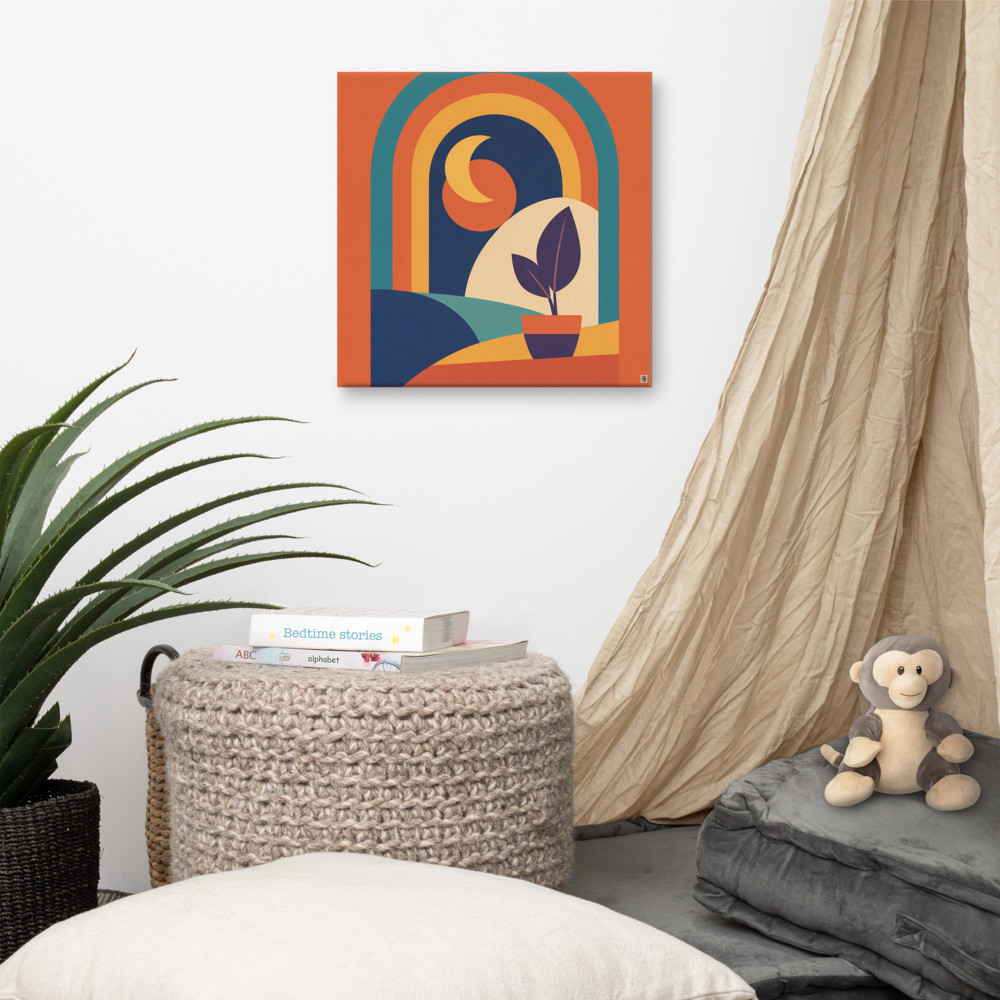
Canvas Prints in Humid Rooms: Why They Warp and What Helps
A canvas print is essentially a piece of woven fabric stretched tight over a wooden frame. That's the thing to hold in your head when you're deciding where to hang one. It's not a sealed, rigid object — it's cloth and timber, both of which respond to the air around them. In a dry living room with steady heating, that's a non-issue. In a bathroom after a long shower, or a kitchen where pasta water has been going for twenty minutes, it's a bit more complicated.
The warping itself is usually subtle. You'll notice it as a slight ripple across the surface when light catches it from the side, or a corner that looks a touch loose where it used to be drum-tight. Sometimes the wooden stretcher bars behind the canvas absorb moisture and bow ever so slightly, which pushes the fabric out of true. Sometimes it's the other way round — the canvas itself slackens in damp air and then, when the room dries out, doesn't quite return to where it was. Neither is a manufacturing fault. It's just what happens when natural materials live in changeable conditions.
Why bathrooms and kitchens are the tricky ones
The two rooms that cause the most grief are, predictably, the ones where humidity spikes hardest and fastest. A bathroom can swing from 40% relative humidity to 90%+ in the space of a ten-minute shower, and then back down again once the extractor's done its job. Those rapid swings are worse than steady dampness, because the canvas is constantly expanding and contracting. Kitchens are gentler but more frequent — a bit of steam every evening, day in, day out, especially if your hob is anywhere near a wall you've hung art on.
The other quiet culprit is temperature differential. A cold external wall in a steamy bathroom will have condensation forming on it long before the rest of the room feels damp. If your canvas is pressed flat against that wall, the back of it is sitting in a microclimate that's noticeably wetter than the room average. That's where you get the proper warping — and occasionally, in extreme cases, the start of mildew spots on the back of the canvas. Not common, but I've seen it.
What actually helps
The single most useful thing is air circulation behind the canvas. Most canvases come with a sawtooth hanger or a wire that already holds the frame a few millimetres off the wall, but if yours is sitting flush, a couple of small self-adhesive felt pads or rubber bumpers on the back corners will lift it 3-5mm clear. That tiny gap lets air move behind the print and stops moisture getting trapped between the canvas back and a cold wall. It's not glamorous advice, but it's the one that makes the biggest difference.
Beyond that, it's mostly about being sensible with placement. In a bathroom, the wall furthest from the shower and closest to the extractor fan is the safest spot. Avoid hanging anything directly above a bath or sink where it'll cop splashes, and steer clear of the wall the shower head sprays towards even if there's a screen — fine mist still travels. In a kitchen, keep canvas prints away from the immediate splash zone behind the hob and out of the steam plume that rises from a kettle or pan. A piece like Canyon Moon might look lovely on the wall opposite your dining table, but I'd think twice about putting it directly above a gas hob.
Running your extractor fan for a few minutes after a shower or cooking session matters more than people realise. Most of the warping damage I hear about comes from rooms where the fan gets switched off the moment the person leaves, leaving the moisture to settle wherever it likes. Five extra minutes of extraction makes a real difference.
Where I'd genuinely avoid hanging canvas
Directly opposite a shower with no screen. Above a kettle. On the cold external wall of a poorly-ventilated bathroom. Right next to a tumble dryer vent (you'd be amazed). Anywhere the canvas would be touching tiles that get cold and condensate.
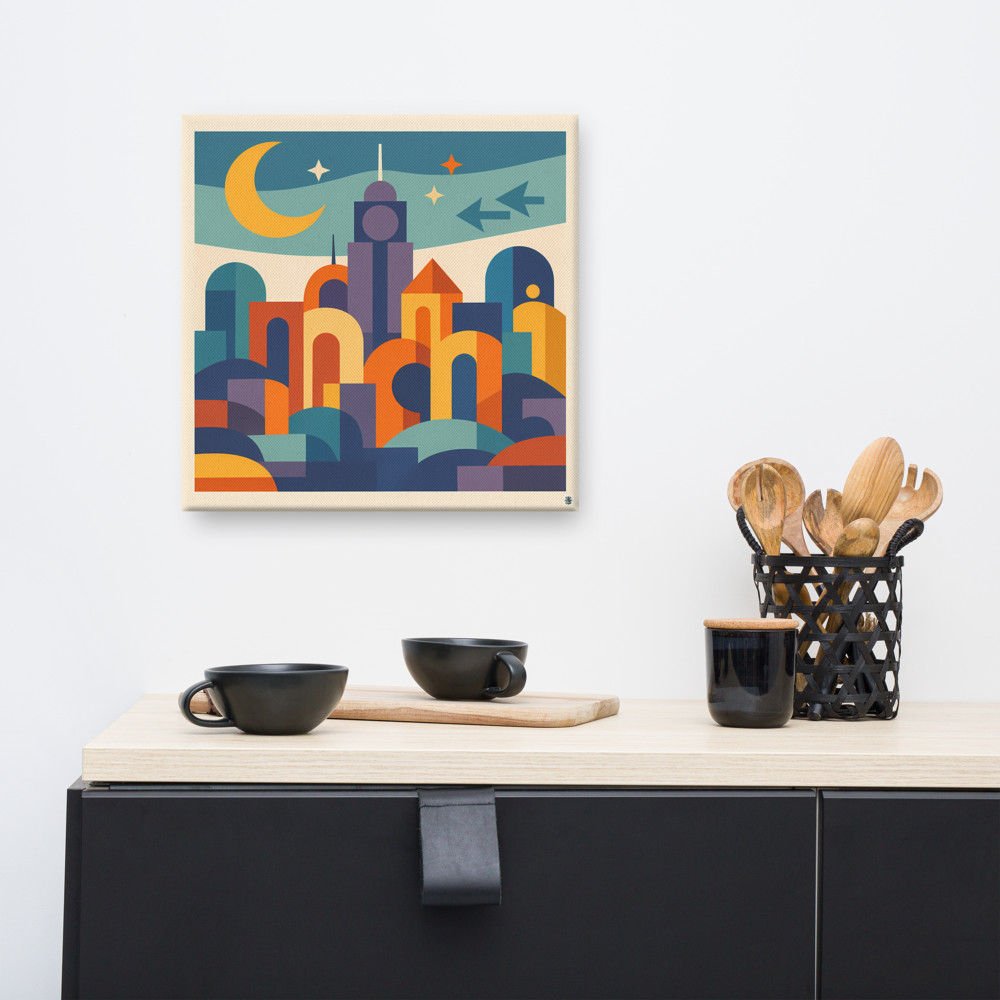
None of this means canvas is off-limits in damp rooms — plenty of people hang them in bathrooms and kitchens with no trouble at all for years. It's about giving the piece a fighting chance. A bold geometric like Night Market on the dry wall of a well-ventilated bathroom will be absolutely fine. The same print pressed flat to a cold tiled wall opposite the shower is asking for trouble within a year.
If you've already got a canvas that's started to ripple slightly, don't panic. Most mild warping resolves itself once the canvas spends a few weeks in a drier, more stable environment. Take it down, lay it face-up somewhere warm and dry but out of direct sun, and leave it for a fortnight. The fabric usually retensions itself as it dries out. If it doesn't, most canvases have small wooden wedges (sometimes called keys) tucked into the inside corners of the frame — tapping these gently further into the corner slots tightens the canvas back up. It's a fiddly job but it works.
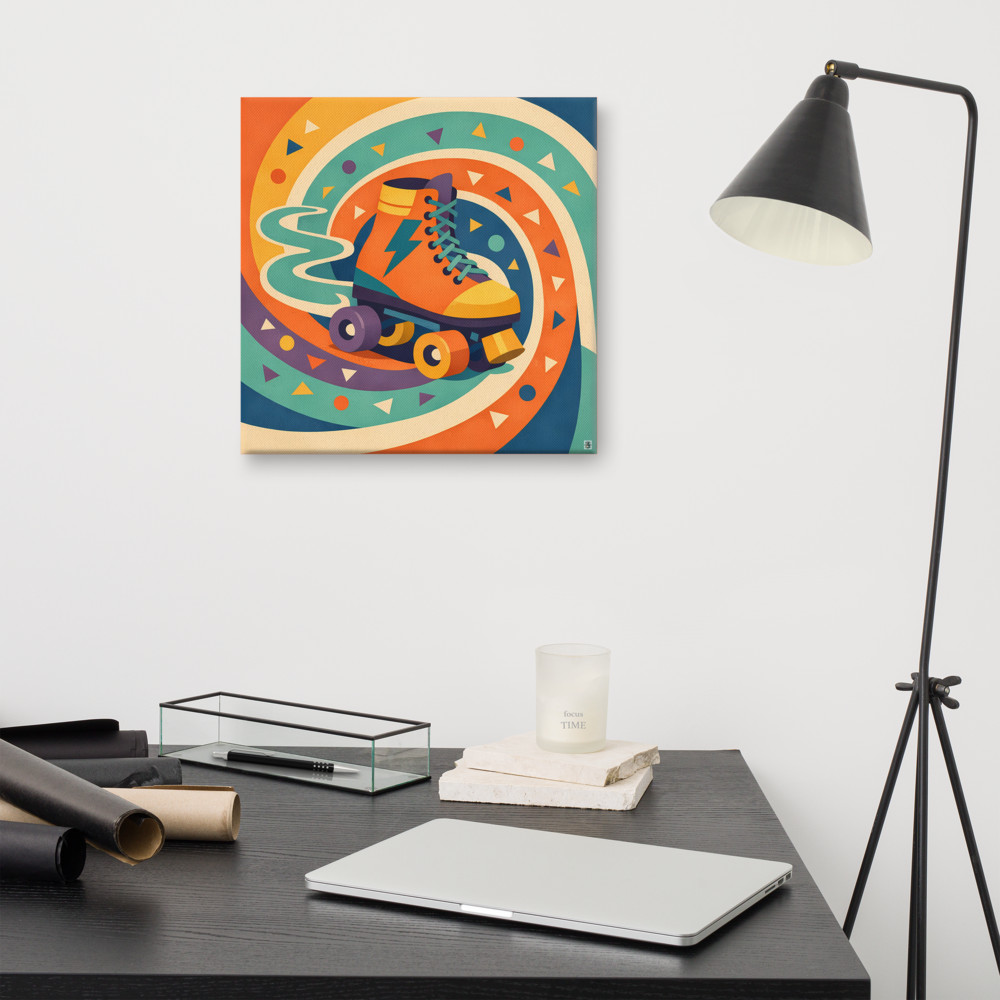
For what it's worth, if you're truly set on art in a high-humidity room and you've been bitten once before, a framed print behind glass is the more forgiving option. Something playful like Tangerine Rink framed properly will shrug off bathroom humidity in a way that bare canvas just won't. Canvas is wonderful in the right room. It just isn't every room.
Related articles


Mentioned in this article