InkSmithery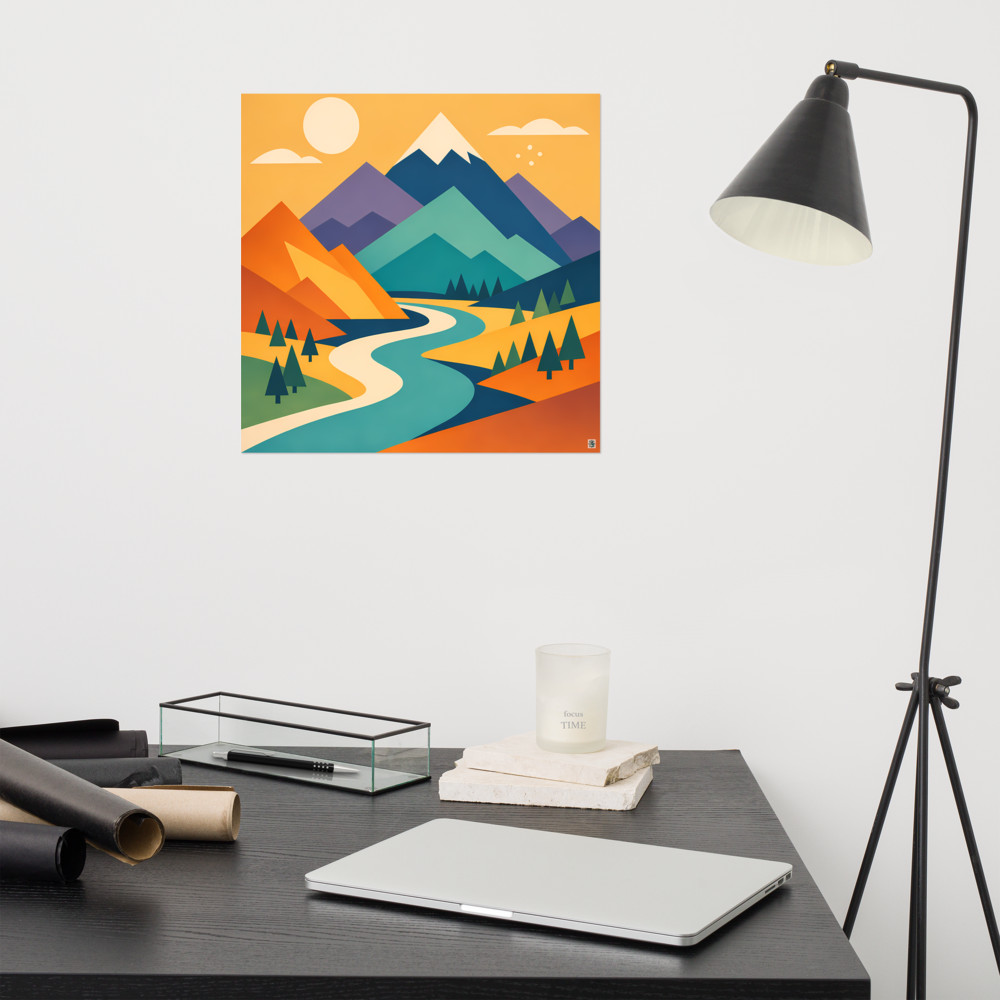
Hang Art at Eye Level — But Whose Eye Level, Exactly?
Somewhere along the way, "hang art at eye level" became the one piece of interior advice everyone repeats. It's good advice. It's also a bit useless on its own, because eye level depends entirely on whose eyes we're talking about, and what they're doing.
The number most galleries and museums work to is 57 inches (about 145cm) from the floor to the centre of the artwork. That's not arbitrary — it's roughly the average eye height of an adult standing up, give or take. The Museum of Modern Art uses it. Most curators I've read about use it. And once you start measuring artwork in your own home, you'll probably notice that the pieces that feel "right" are sitting somewhere very close to that line, while the ones that bug you are usually too high.
Too high is the default mistake, by the way. Almost nobody hangs art too low. If something in your house feels off and you can't put your finger on why, walk over and look at where the centre of the frame sits. If it's level with your forehead or above, that's your answer.
Why 57 inches actually works
The reason the museum standard holds up in normal houses is that it's a compromise height. It works whether you're standing in a hallway, walking past on your way to the kitchen, or sitting on a chair across the room. The centre of the piece lands in your natural line of sight without you having to tilt your head, and the artwork reads as part of the room rather than something floating up near the ceiling.
The other thing 57 inches does, which people don't talk about enough, is that it visually anchors the artwork to the furniture and the floor rather than the ceiling. Rooms feel more grounded when the art is lower than you'd instinctively put it. If you've ever been to a friend's house and thought their walls looked calm and considered without being able to say why, this is often it.
A practical note: 57 inches is to the *centre* of the piece, not the top, and not where the hook goes. So if you've got a 60cm tall print, the top of it will sit roughly 175cm off the floor, and the hook will sit a few centimetres below that depending on how the wire or sawtooth is fixed. Measure twice, drill once, all that.
When to ignore the rule entirely
Here's where it gets interesting, because the 57-inch rule assumes you're standing up and looking straight ahead. The moment that stops being true, the rule stops applying.
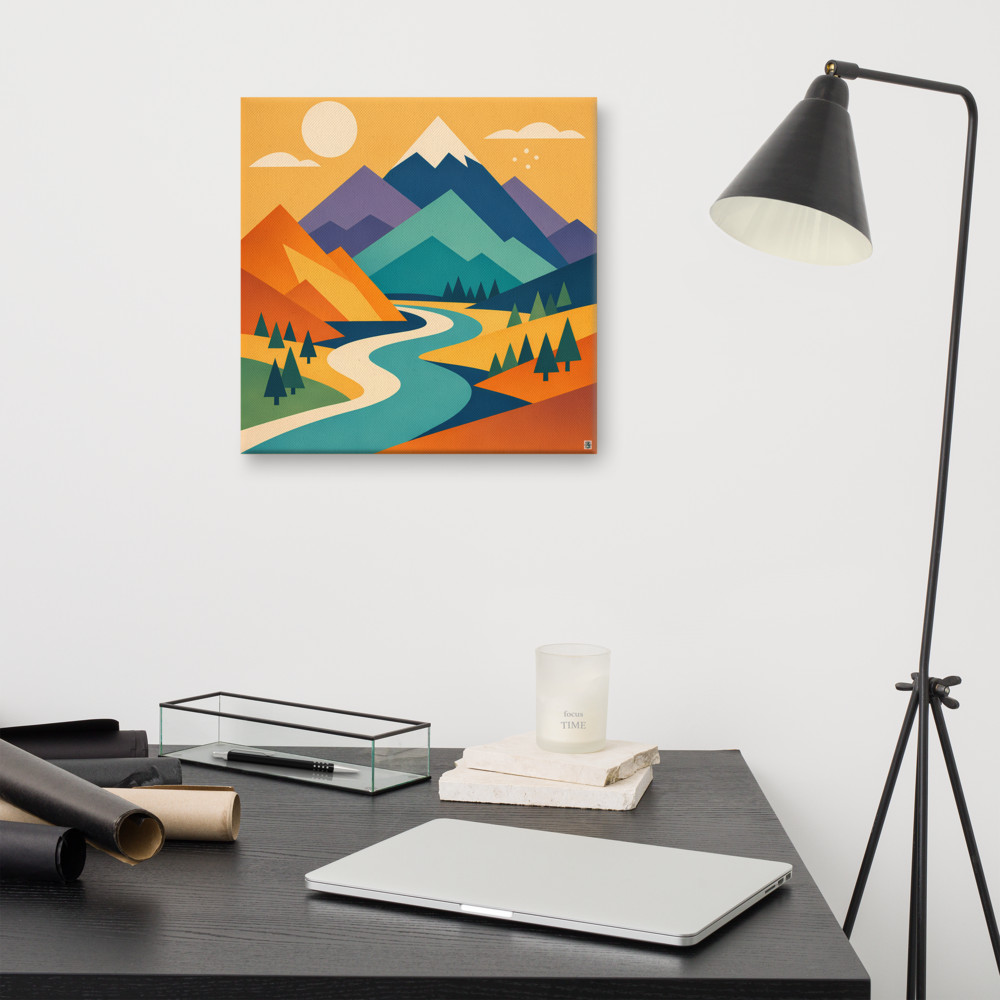
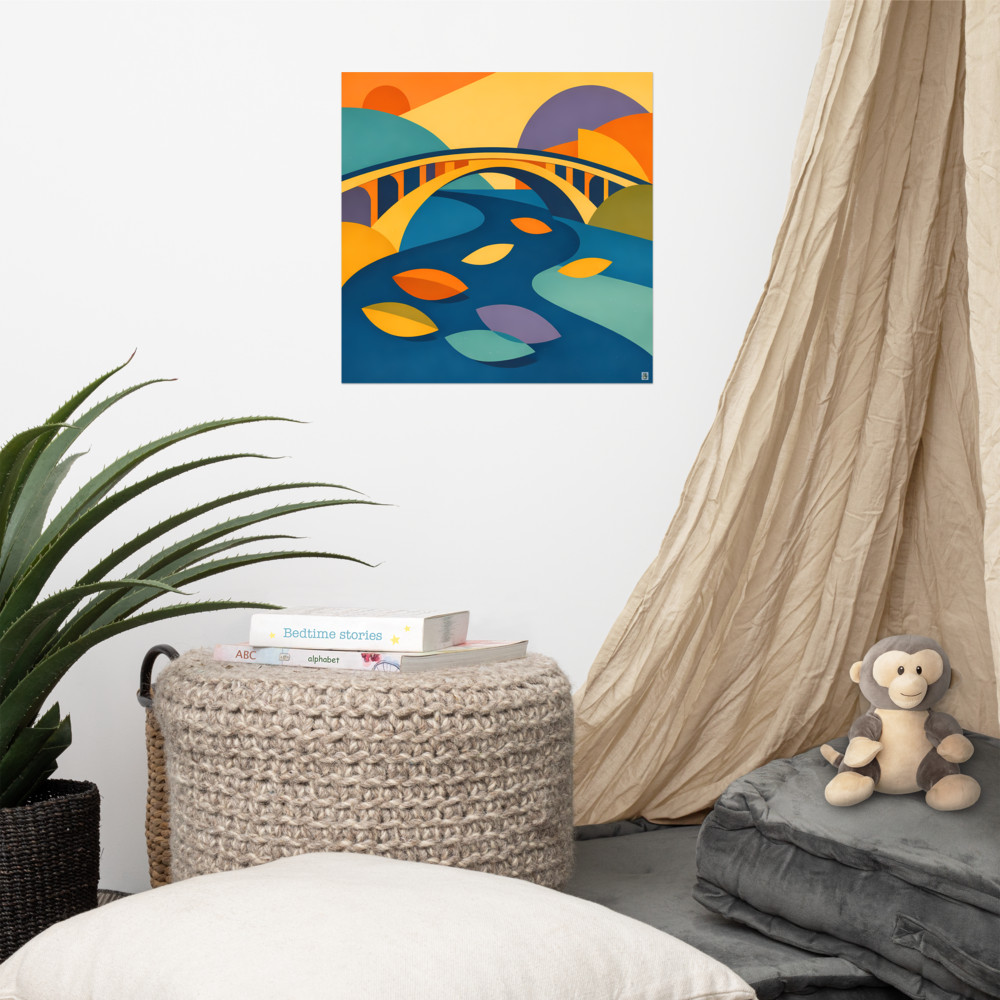
Above a sofa. This is the big one. If you hang a piece at 57 inches above a sofa, there's often a strange floating gap between the top of the sofa back and the bottom of the frame. The fix is to think of the sofa as the new floor. You want the bottom of the artwork sitting roughly 15-25cm above the sofa back — close enough that they feel related, far enough that they're not touching. For a tall piece like Upper Vale hung in portrait above a three-seater, that usually means the centre ends up a bit higher than 57 inches, and that's fine. The sofa is doing the anchoring instead of the floor.
In a dining room or anywhere people are mostly seated. Eye level when you're sitting is closer to 115-120cm. If the room is genuinely a sitting room — dining, snug, reading corner — you can drop the artwork a touch lower than the standard. Not loads. Maybe 5-10cm. Enough that it feels right when you're at the table, without looking weirdly low when someone walks through.
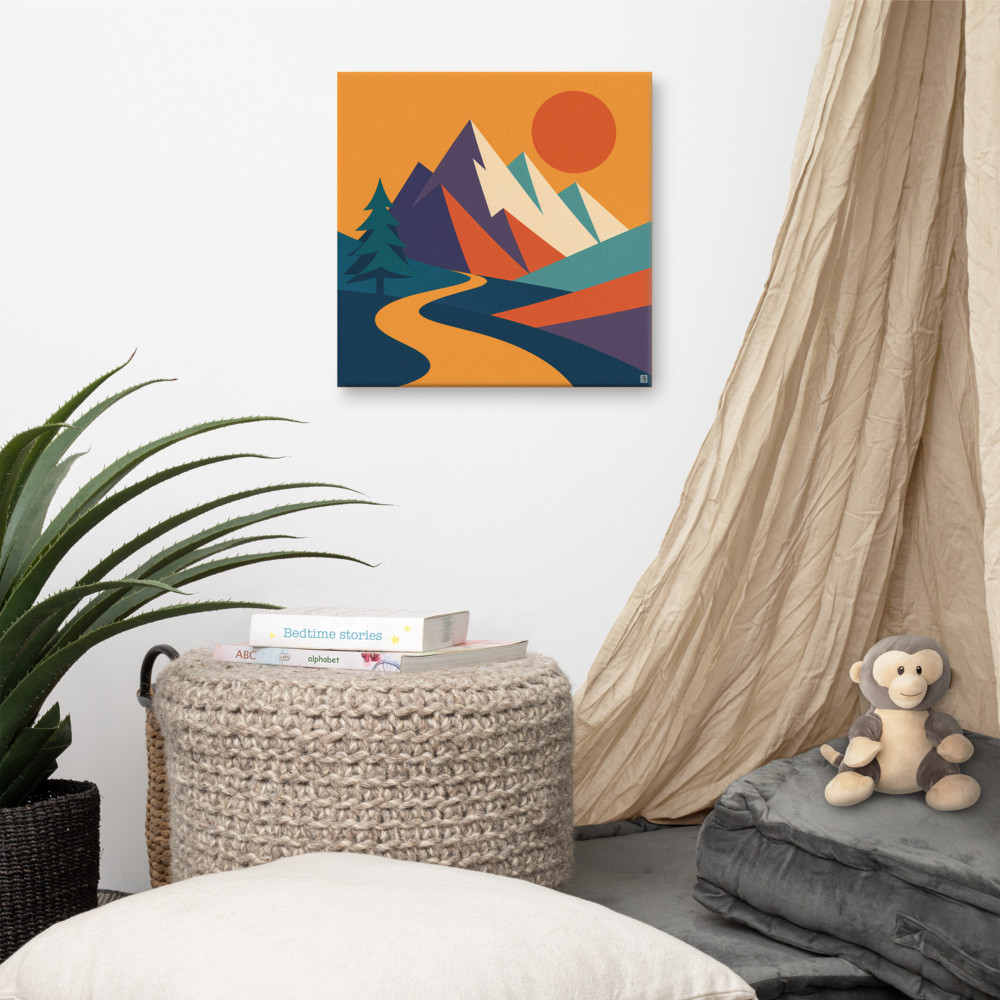
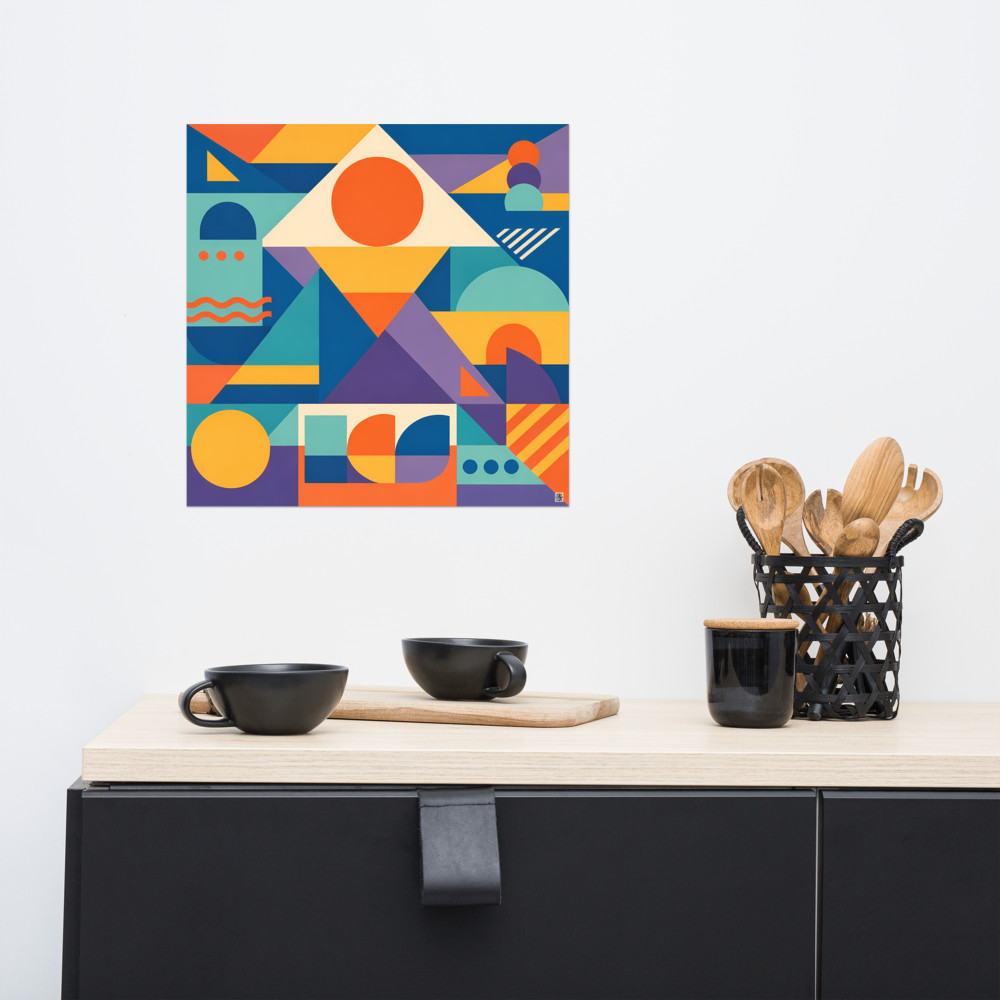
Stairwells. This is the one that breaks people's brains, and there isn't really a single rule. What I'd suggest: stand on the stairs at the point you most often pause or look up, and hang the piece so its centre is at your eye level *from that spot*. For a gallery wall going up the stairs, the trick is to follow the line of the staircase — so each piece steps up roughly in line with the treads, keeping a consistent distance from the handrail or the stair nosing rather than from the floor. Something graphic with a strong central element, like Ochre Pass, works well on stairs because it reads clearly even when you're glancing at it on the move.
Above a bed, console table, or fireplace. Same principle as the sofa. The piece of furniture becomes the anchor, and you want a sensible gap — usually 15-30cm — between the top of the furniture and the bottom of the frame. Fireplaces are slightly different because the mantel itself sits quite high, so you often end up hanging the art higher than 57 inches by necessity. Don't fight it.
Very tall ceilings. In an older house with 3-metre ceilings, sticking rigidly to 57 inches can make the art look stranded in the lower third of the wall. You can creep up a bit — maybe 60-62 inches to centre — but I'd resist the urge to "fill" the wall by hanging things really high. Better to add a second piece below or above and create a vertical arrangement than to hoist one piece up to ceiling height where nobody can comfortably look at it.
A quick sanity check before you drill
Cut a piece of paper or newspaper to roughly the size of your print. Stick it on the wall with masking tape. Live with it for a day. Walk past it, sit down near it, look at it from the doorway. If it feels too high after twelve hours, it's too high — trust that instinct, because your eye is doing maths your brain can't articulate.
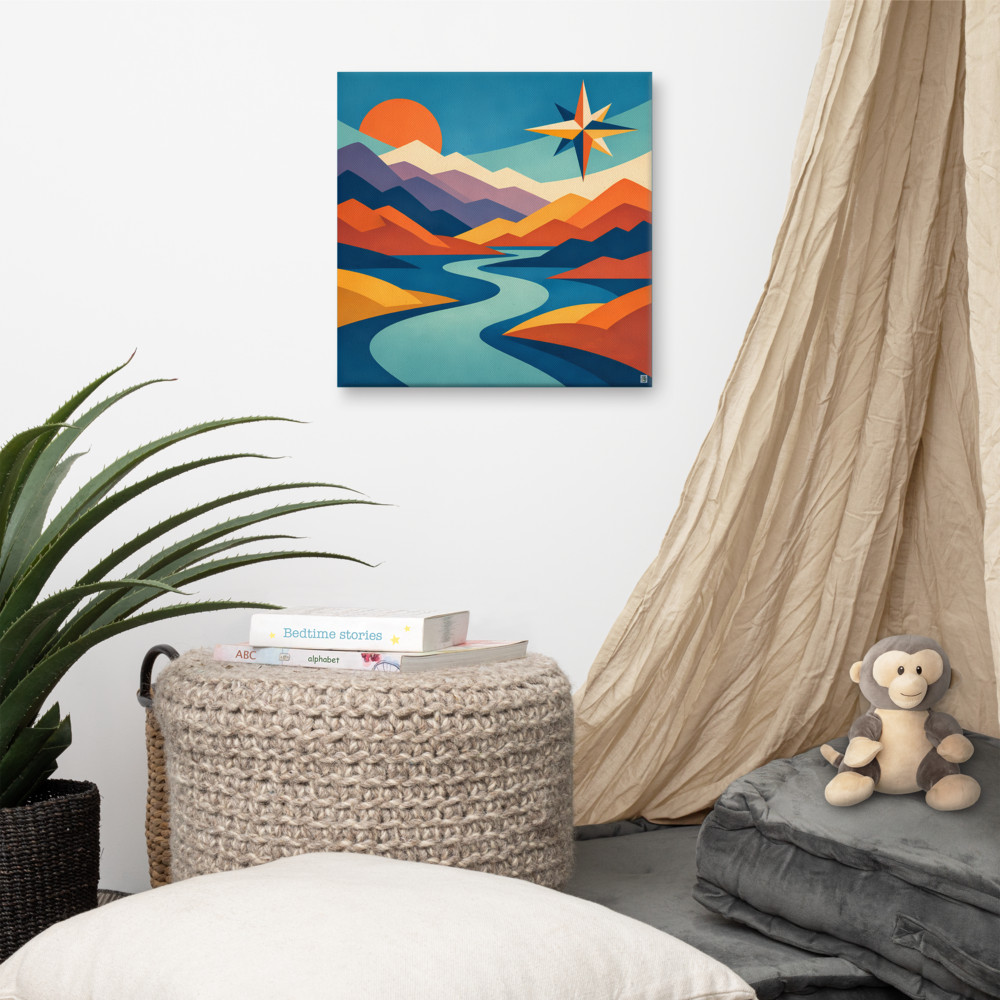
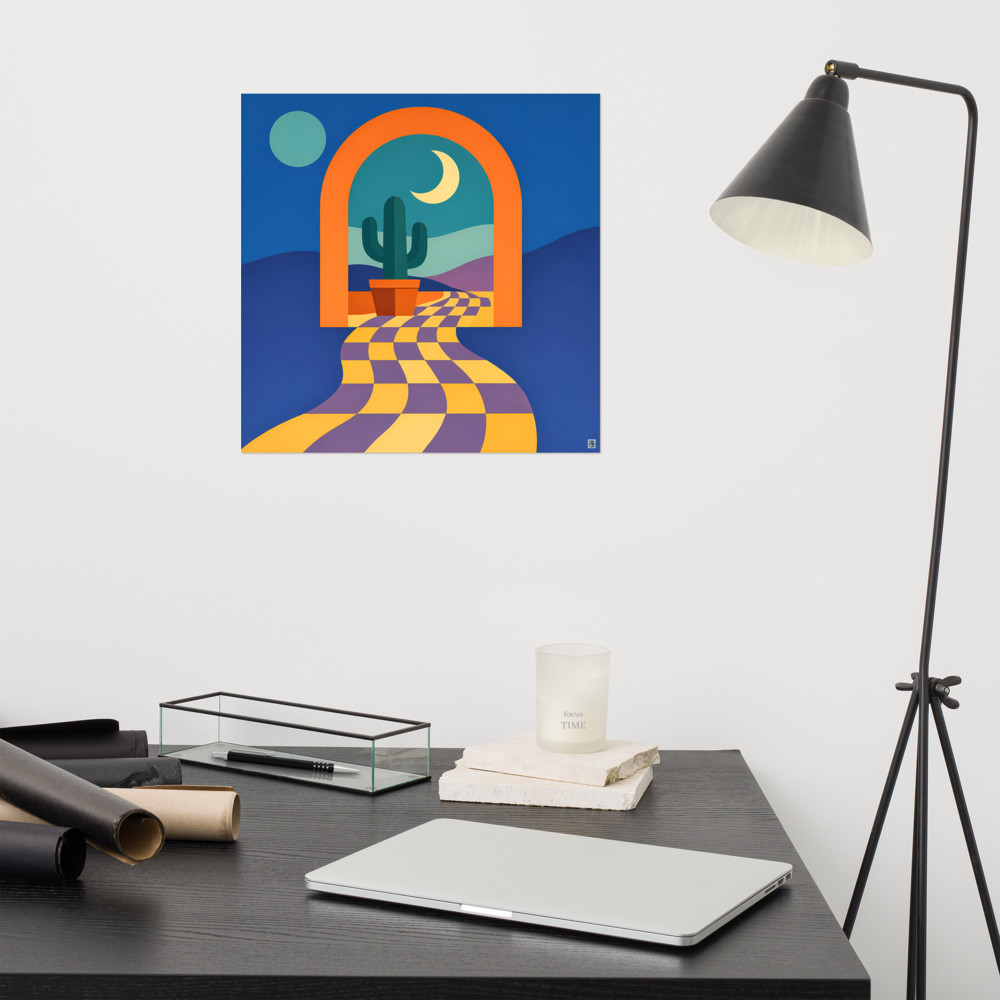
If you're hanging a piece with a clear horizon line or focal point — something like Northward Bend where there's an obvious centre — it's worth thinking about where that focal point sits rather than just the geometric centre of the frame. The eye goes to the focal point first. If that's sitting at roughly your eye level, the piece will feel right even if the maths is slightly off.
The 57-inch rule is a starting point, not a law. Use it when you don't know what else to do, and break it the moment the room tells you to.
Related articles
Mentioned in this article