InkSmithery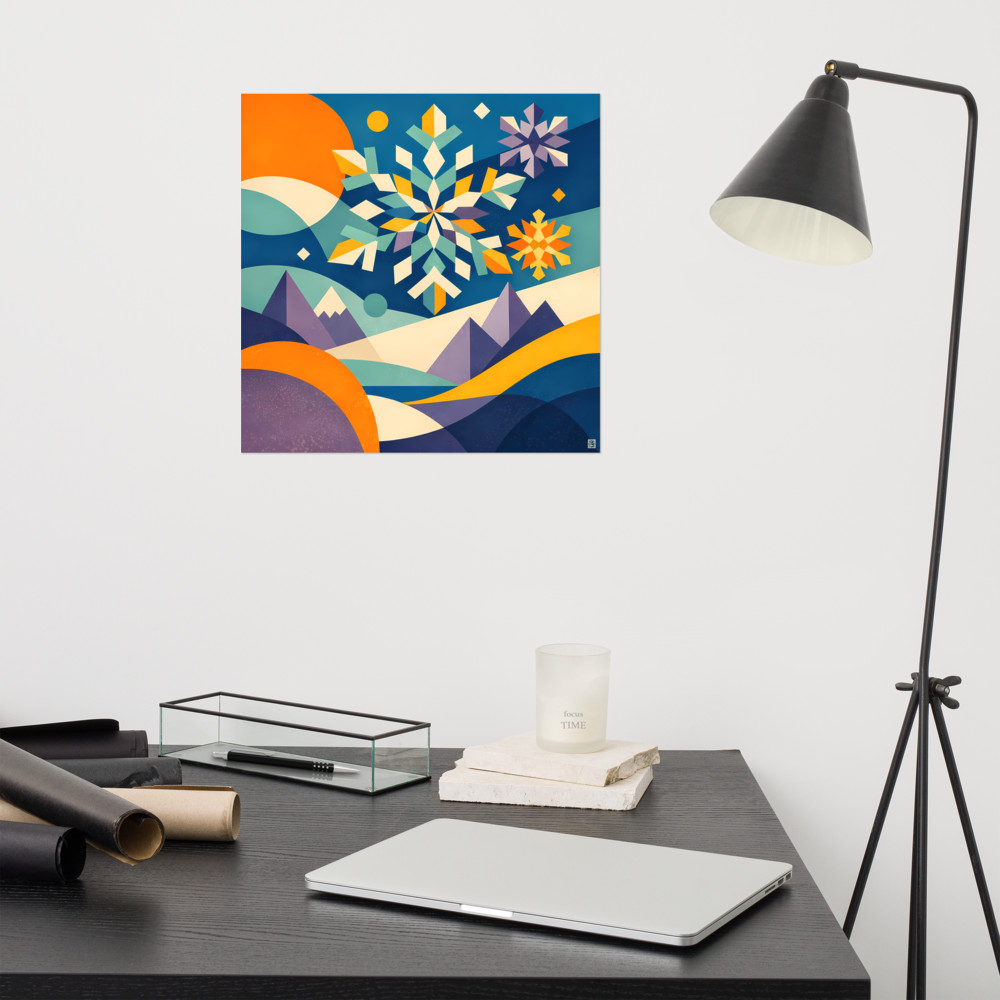
How to warm up a cold-feeling room without painting a wall
Some rooms just feel cold. Not temperature-cold — although sometimes that too — but visually cold, in that way where you walk in and your shoulders tense up a bit and you can't quite put your finger on why. Usually it's a combination: north-facing light, a lot of white or pale grey, hard floors, maybe a big window that shows more sky than anything else. Painting the walls is the obvious answer, and it does work. But it's also a weekend of your life, plus dust sheets, plus you have to live with the smell for a few days.
The good news is you don't actually have to repaint to shift how a room feels. You just need to add warmth somewhere the eye lands. One properly warm element in the right spot does more than people expect, and stacking two or three is usually enough to make a genuinely cold room feel like somewhere you'd want to sit down.
Why one warm element does so much work
Rooms read as cold when nearly everything in them sits on the cool side of the colour wheel — blues, greys, cold whites, black, chrome, that sort of thing. Your eye has nothing to rest on that says *warm*. Introduce a single object with real warmth in it — burnt orange, mustard, terracotta, deep gold, warm brown, oxblood — and the whole room recalibrates around it. It's a bit like adding a squeeze of lemon to a soup that tastes flat. Nothing else changed, but suddenly everything tastes better.
The trick is that the warm element has to be big enough or bold enough to actually register. A single mustard cushion on a huge grey sofa gets swallowed. A framed print above the sofa with warm sunset tones, on the other hand, holds its own because it's at eye level and it's contained by a frame that draws attention to it.
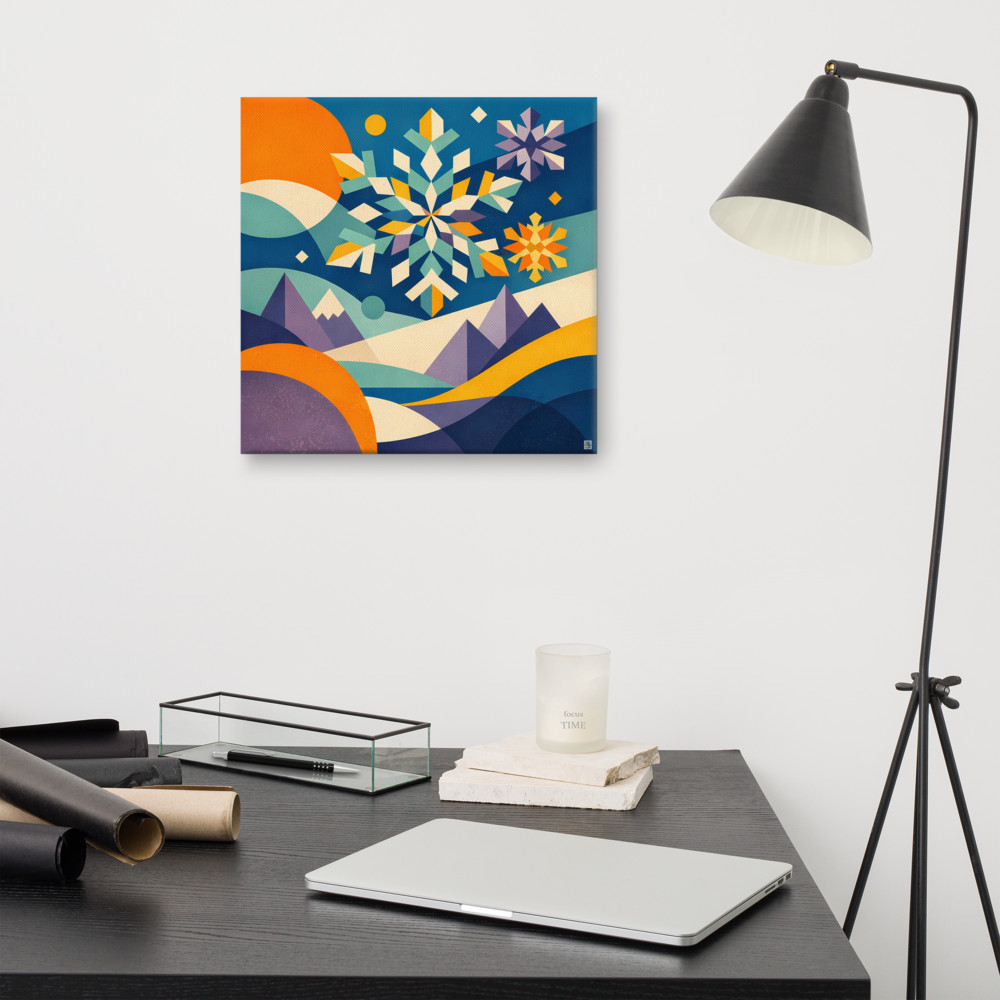
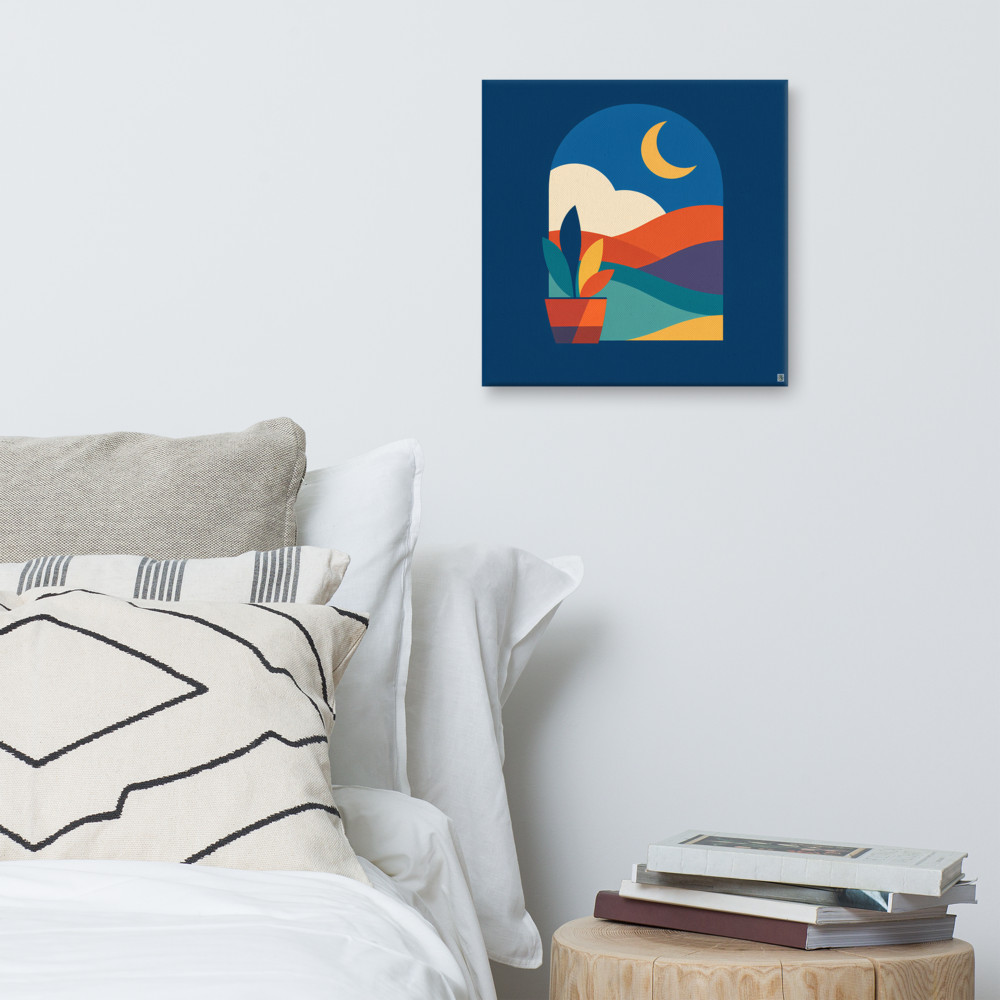
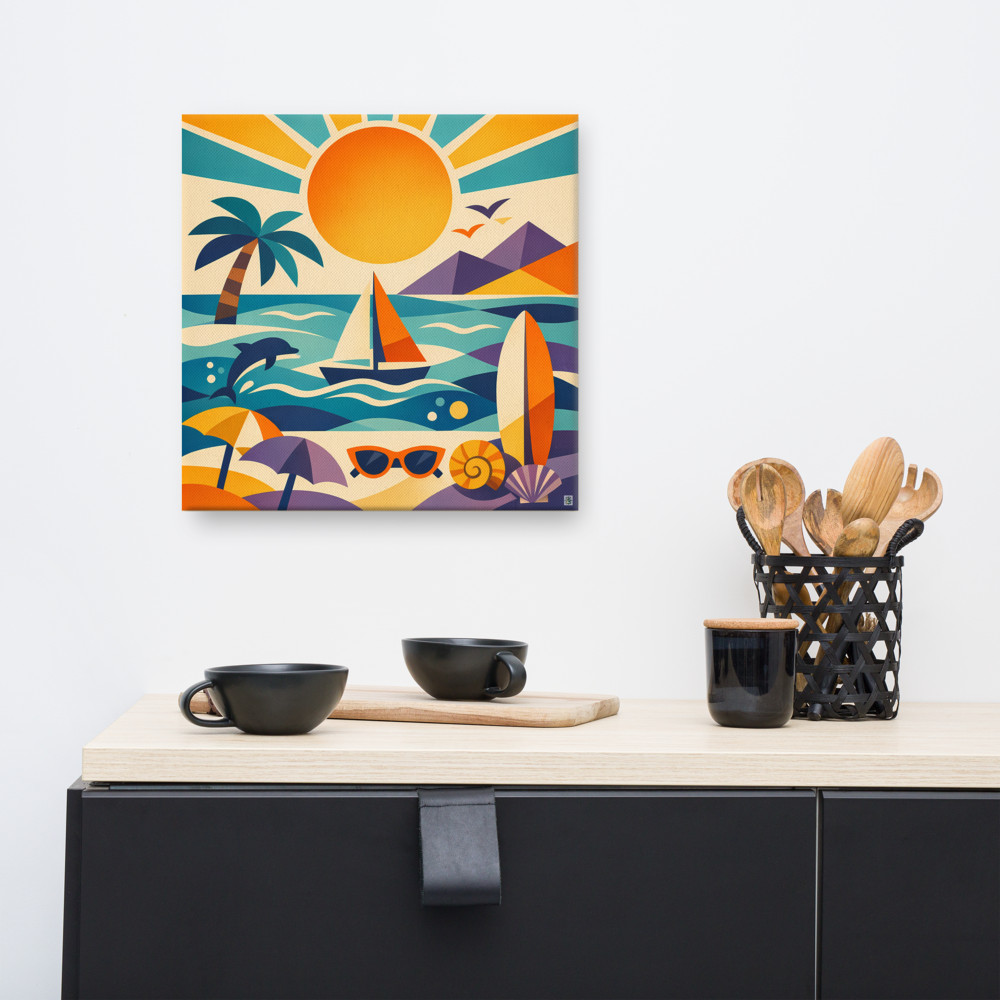
This is why art is one of the most efficient ways to warm up white walls. You're not covering the wall, you're punctuating it. Something like Sunward Cove, with its warm sun tones and terracotta shapes, will throw off warmth against a cold white wall in a way that a cushion of the same colour just can't. The wall itself becomes the backdrop for the warmth, rather than fighting it.
Where to actually put the warmth
Think about where your eye naturally goes when you walk into the room. For most people it's one of three places: the main wall opposite the door, the sofa or bed, or wherever the biggest lamp is on at night. Those are your leverage points. Put warmth there and it does the heavy lifting for the whole space.
For the main wall, go bigger than you think. A print that feels large in the shop feels smaller once it's up, and undersized art on a big cold wall makes the wall look even colder because there's more empty space around it. If you're working with a really pale, chalky room, a piece with warm ambers and dusk tones — Distant Vale is the sort of thing I mean — gives the eye somewhere to settle. Even the pieces that lean cool overall, like Northern Drift, often have warm accents built in that stop a room feeling clinical, which is worth knowing if you don't actually want to abandon a cool palette entirely.
On the sofa or bed, a heavy throw blanket in a warm tone does two jobs at once. It's visually warm and it's literally warm when you pull it over your legs. Rust, ochre, deep terracotta, warm cream — all of these read as cosy against grey or navy upholstery. Fold it so a decent chunk of it shows, not a neat little strip. You want it to look used, or at least usable.
Light is the bit people forget
Here's where cold rooms often get sabotaged even after you've added the art and the throws: the bulbs. If you've got cool-white LEDs pumping out 5000K light, your carefully chosen warm palette will look weirdly muted and slightly grey after dark. It's genuinely one of the biggest fixes you can make, and it costs about a fiver.
Swap to bulbs around 2700K, sometimes labelled *warm white* or *soft white*. Some brands do a 2200K bulb that's even warmer, more like candlelight, which is lovely for a lamp you use in the evening but a bit much for a main ceiling fixture. Aim for lamps rather than overhead lighting where you can — a couple of table lamps and a floor lamp at different heights create pools of warm light instead of one flat wash from above. This is probably the single biggest reason some rooms feel cosy at night and others feel like a dentist's waiting room.
Lampshades matter too. A cream or amber fabric shade will throw warm-tinted light even with a neutral bulb. A white paper shade or a bare bulb will not. If you've got the wrong shade on the right bulb, you're undoing your own work.
Building it up without overdoing it
You don't need to warm up everything. In fact, a cold room with a few well-placed warm anchors usually feels better than a room that's been drowned in orange. The contrast is what makes the warmth read as warm. So resist the urge to buy matching cushions, matching throw, matching lampshade, matching print — you'll end up with something that looks staged.
Start with one thing. Live with it for a week. See where the room still feels flat, and add the next piece there. Rooms are a slow build, and the ones that feel good almost never came together in a single afternoon.
Related articles

Mentioned in this article