InkSmithery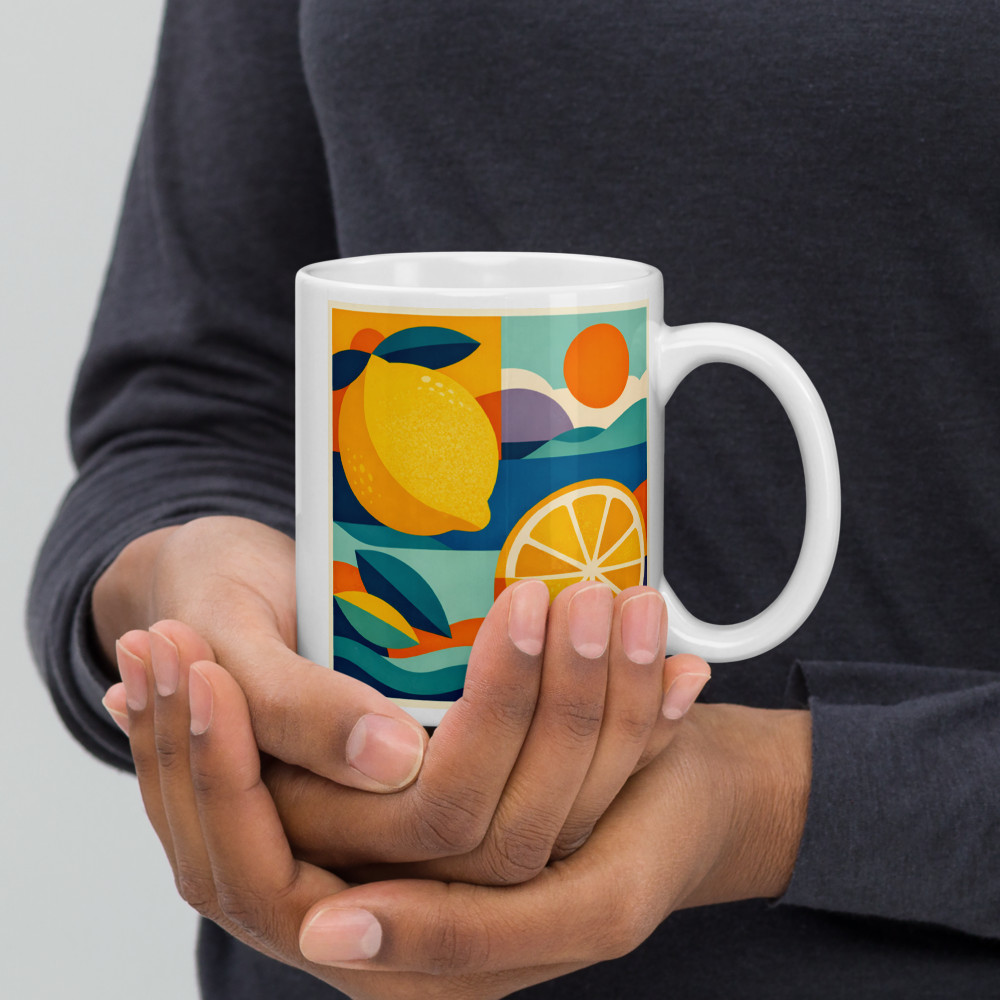
The Quiet Case for Buying Yourself Something Small
There's a strange bit of adult logic that goes: I'll treat myself when the big thing happens. When the promotion lands. When the house is sorted. When the kids are older. When the credit card is behaving. And then the big thing does happen, and somehow the treat still doesn't — because by then you've got a fridge to replace, or a boiler making noises, or a wedding to go to that requires shoes.
So the small treat gets pushed sideways, forever. Not because you can't afford it. Because it feels a bit silly to buy a £14 mug when nothing in particular is being celebrated.
I'd argue that's precisely the point. The small, unearned, no-occasion thing you buy for yourself on a Wednesday is doing more work than you think — both for your mood and, oddly, for the room it ends up in.
Why we forget to do it
Most of us are pretty good at buying things for other people. Birthdays, Christmases, thank-yous, that colleague who's leaving. We're also fine buying practical things for ourselves — new hoover bags, a decent frying pan, socks. What we're bad at is the middle category: a small object that exists purely because we like it.
Part of it is guilt. Part of it is that treating yourself has been so thoroughly marketed at us (spa days! bottomless brunch! a weekend away!) that the phrase now sounds expensive and effortful. If a treat has to be an event, most weeks won't have one.
And part of it, honestly, is that a lot of us grew up with a version of thriftiness that treats want as a slightly embarrassing thing to admit to. Need is respectable. Want feels indulgent. So we edit ourselves out of our own shopping baskets.
The fix isn't to spend more. It's to lower the bar for what counts. A new mug counts. A single small print counts. A tea towel you actually like counts. Treating yourself ideas don't need to scale up to be worth doing — in some ways they work better when they don't.
What a small object actually does to a room
Here's the bit I find genuinely interesting. A room you live in every day goes invisible to you. Your brain stops registering the shelf, the corner of the kitchen counter, the wall behind the sofa. This is efficient — you don't need to consciously notice your own hallway every time you walk through it — but it also means the room stops giving you anything. It's just background.
Add one new small thing, though, and the whole area around it wakes up for a bit. A new print above the kettle makes you notice the kettle again. A different mug on the shelf makes you notice the shelf. It's not that the object is transformative on its own; it's that it interrupts the autopilot, and for a week or two you actually see your own home.
This is why small, cheap, frequent additions often do more for how a space feels than one big expensive purchase every few years. A single sofa, however lovely, becomes invisible within a month. A rotating cast of little things — a print swapped out seasonally, a new mug in autumn, a small ceramic bought on holiday — keeps the room in conversation with you.
I'd also say small things are lower-stakes decisions, which means you're more likely to buy the one you actually like rather than the safe beige version. If a £16 print turns out to be a bit much for the hallway, you move it to the downstairs loo and it's fine. If a £400 artwork turns out to be a bit much for the hallway, you have a problem. Small treats let you have a bit of taste without having to be certain about it.
What tends to work
A mug is the classic starter treat because you use it every single day, usually before you're properly awake, and a good one genuinely does make the first ten minutes better. It's not deep. It's just true.
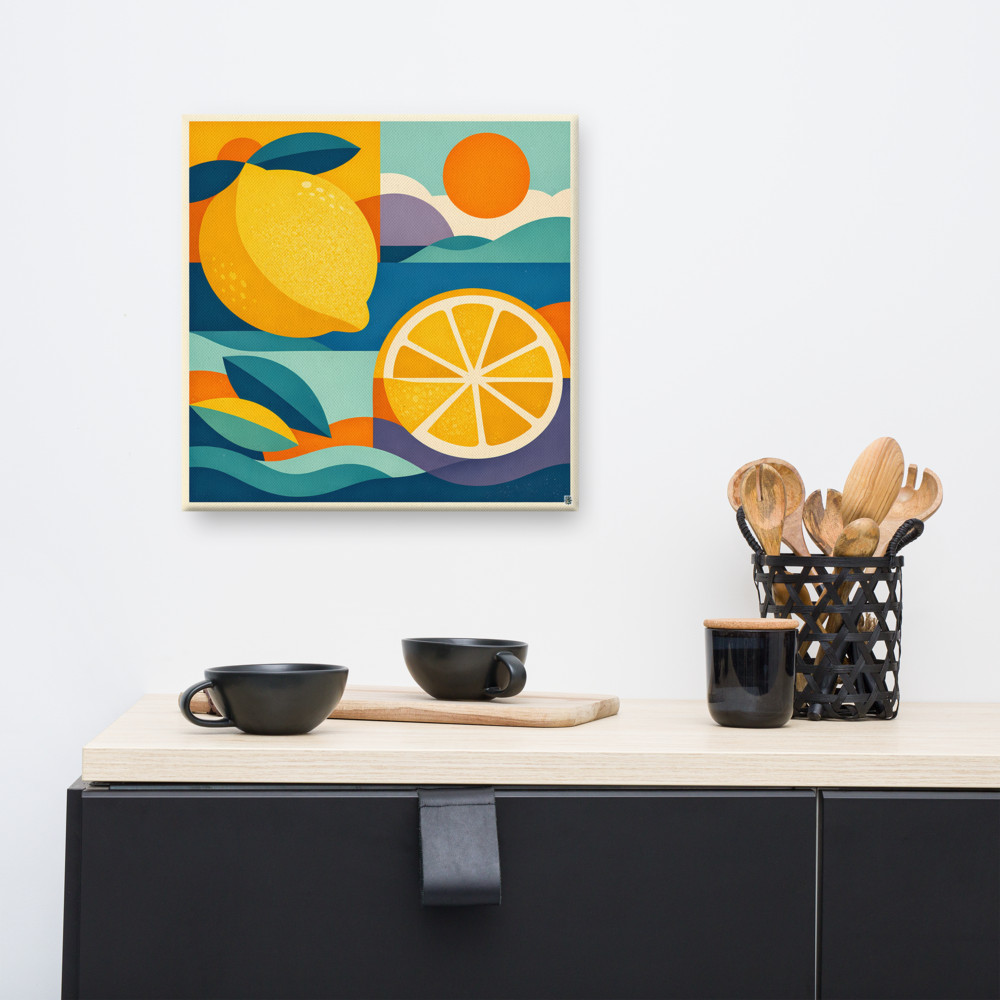
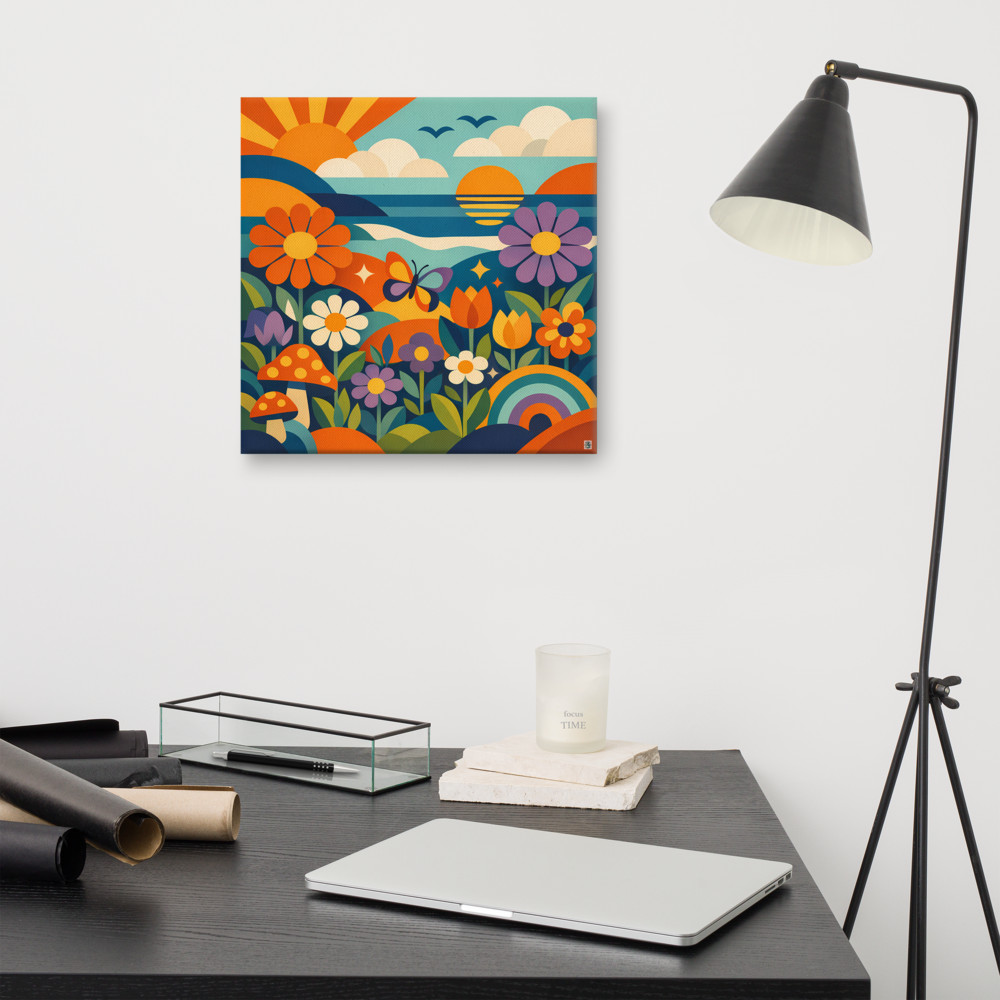
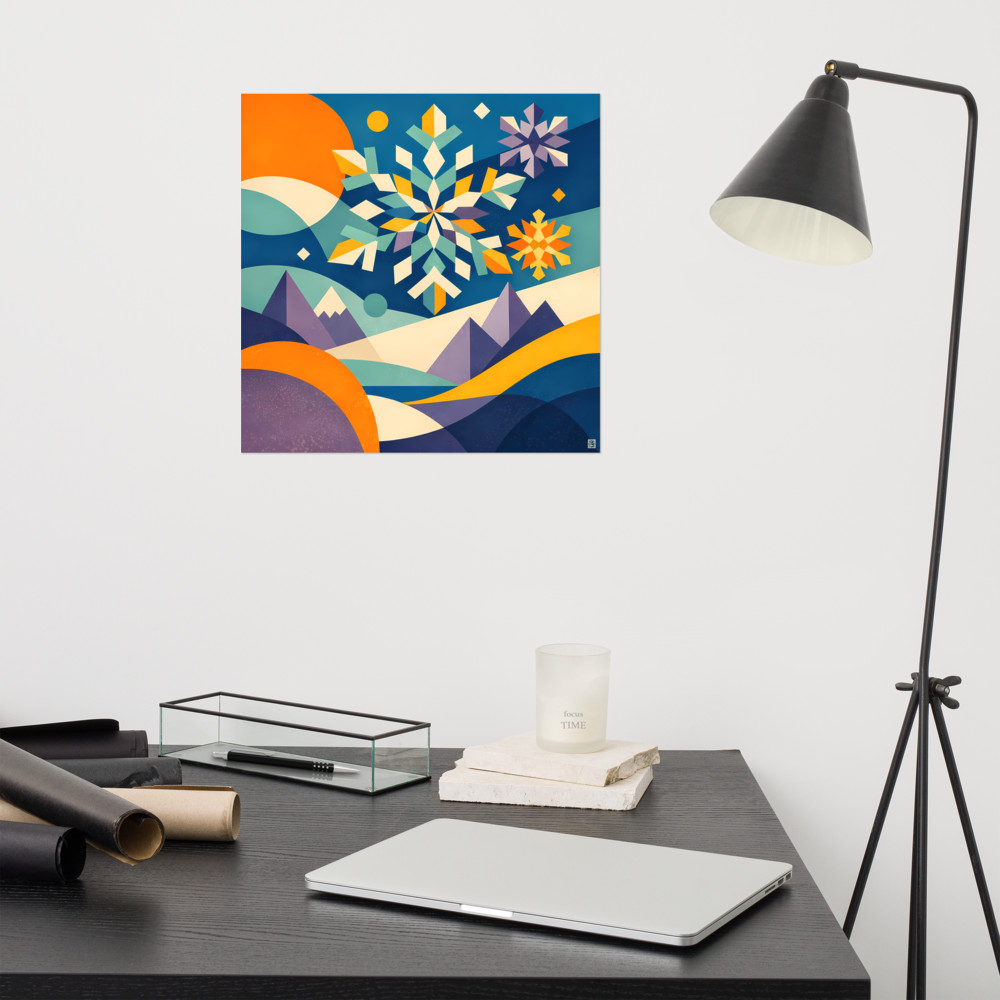
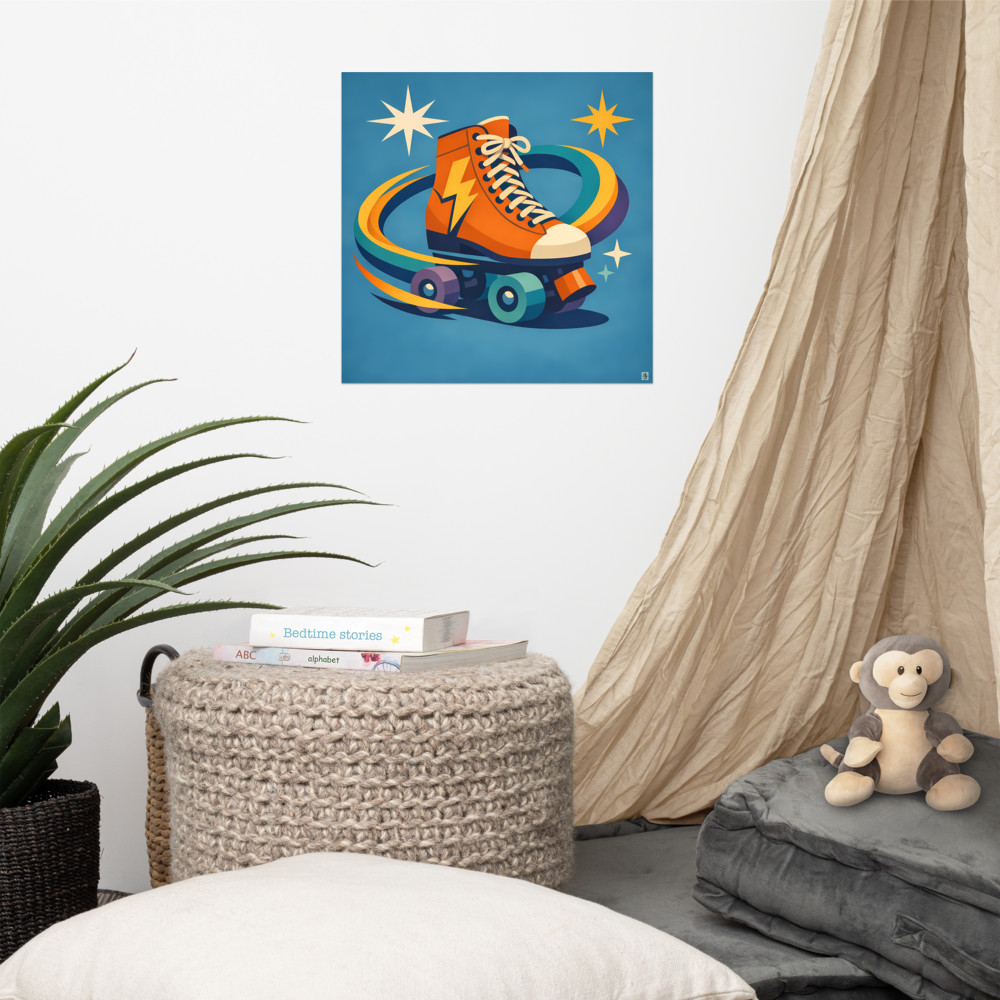
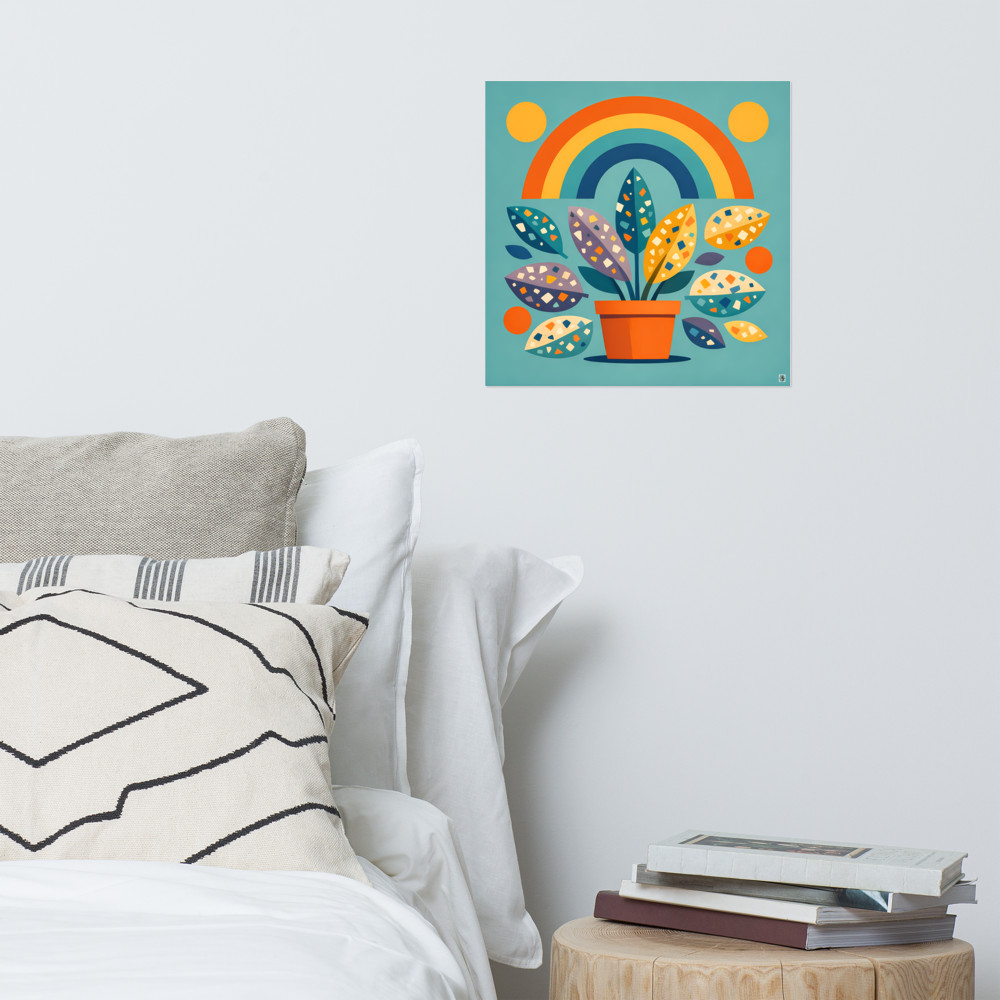
After that, a small print is probably the most disproportionate return on outlay in the whole homewares world. Something like Market Glow in a kitchen where everything else is neutral will do more for the room than repainting a wall — and you can move it when you're bored of it. If your taste runs softer, Meadow Drift is the kind of thing that reads as cheerful without being loud, which is a harder balance than it sounds.
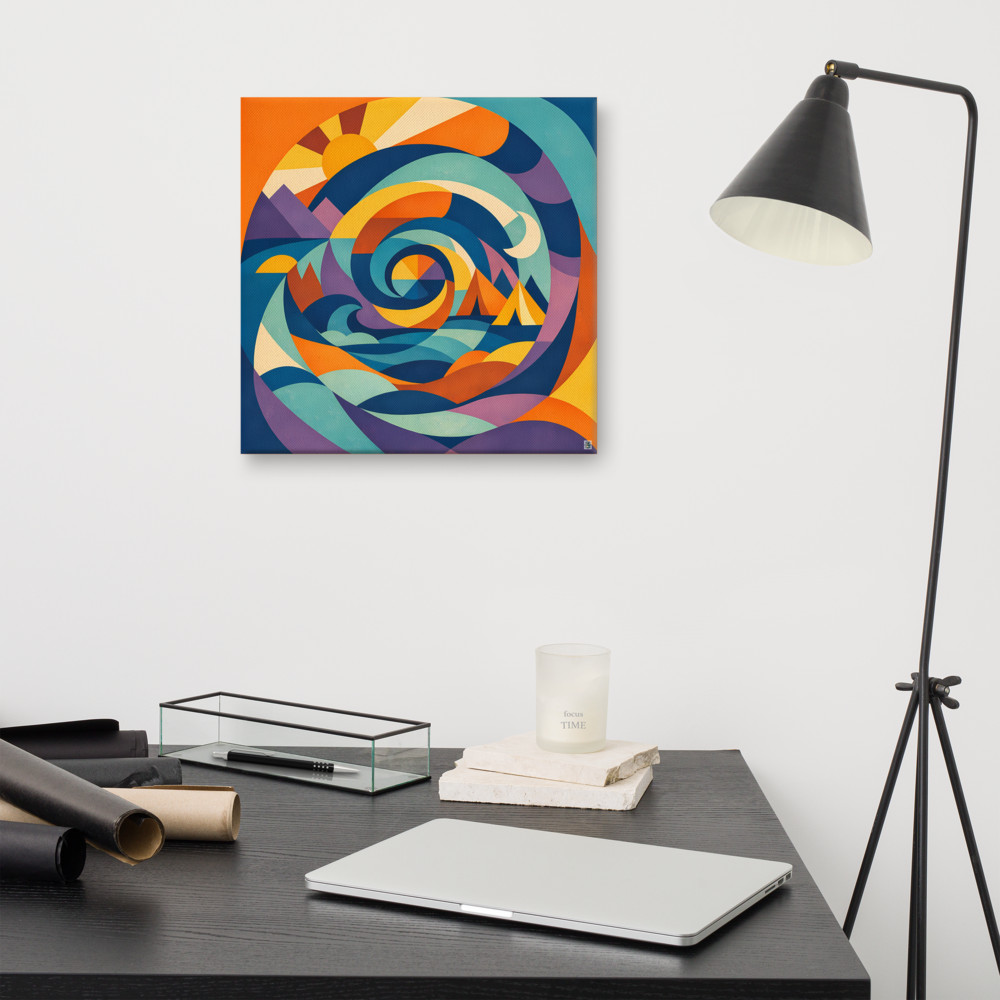
The other move I'd recommend is buying something slightly bolder than you think you can carry off. A small treat for myself, in my own house, almost always ends up being the print I hesitated over — the one where I thought, hmm, is this a bit much? A piece like Solstice Vale is a good example of what I mean: it's got personality, and personality is the thing rooms usually need more of, not less.
Small doesn't mean safe. It means low-commitment. Those are very different.
Permission, basically
If you've read this far you probably already know what you'd buy. There's a mug, or a print, or a something, that's been sitting in a browser tab or the back of your head for weeks. You've been waiting for a reason.
Wednesday is a reason. So is Tuesday. So is the fact that you've been meaning to and haven't. The small unearned thing is one of the more reliable small pleasures available to an adult, and it costs less than a takeaway.
Related articles
Mentioned in this article