InkSmithery
Sun Damage and Wall Art: What Actually Fades, and Where
There's a specific kind of heartbreak reserved for the moment you take a print off the wall after two years and realise the bit that was covered by the mount is a completely different colour to the rest of it. Not subtly. Obviously. Like someone's turned the saturation down on 80% of the image and left a little rectangle of what it used to be.
Sun damage to wall art is one of those slow disasters. You don't notice it happening because you see the piece every day, and your eye adjusts along with the fade. Then a friend visits, or you move house, and suddenly it's clear that your once-navy sky is now a tired denim, and the warm terracotta has gone the colour of weak tea.
It's worth knowing what's actually going on, because a bit of thought at the hanging stage saves you replacing things later.
What sunlight is actually doing to your prints
The damage isn't really from heat. It's from UV, and to a lesser extent visible light in the blue end of the spectrum. UV breaks down the chemical bonds in pigments and dyes, and different colours degrade at wildly different rates. Reds and yellows tend to go first — anything with a warm, organic pigment base is vulnerable. Blues and blacks are more stable but not immune. Cyan can shift over time and leave images looking oddly green or magenta depending on which ink has given up first.
Paper itself also suffers. Cheaper papers yellow and become brittle. Even good archival paper will discolour eventually if it's getting daily sun. And the mount board behind it? That'll brown too, which is where you get those horrible tide-marks around the edges of old framed prints.
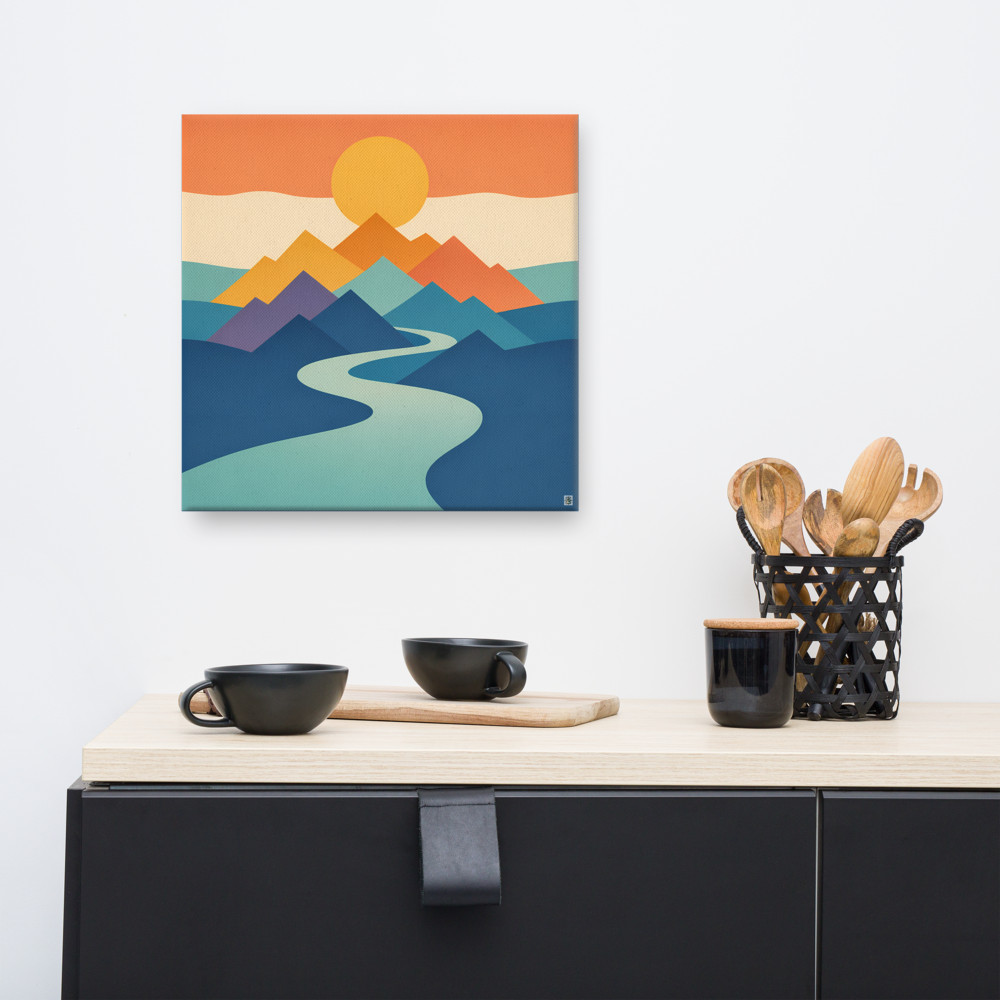
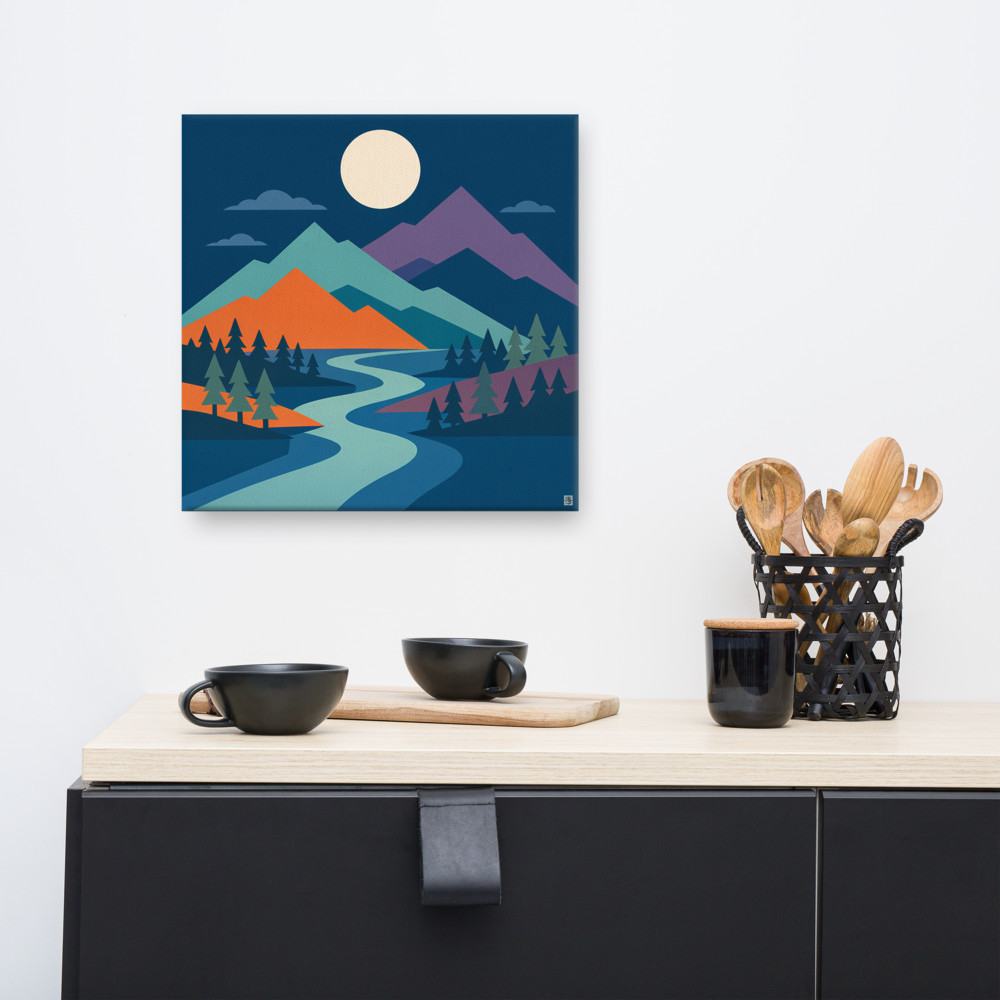
Canvas is genuinely more resilient here, and it's not just marketing. The pigmented inks used on most modern canvas prints are more UV-stable than the dye-based inks in some paper prints, and canvas prints are usually sealed with a protective coating that adds another layer of defence. It doesn't make them sunproof — nothing is — but a canvas in a bright room will typically outlast a paper print in the same spot by a comfortable margin. So if you've fallen for something like Distant Pass and the only wall you can hang it on gets a fair bit of light, the canvas version is the more sensible choice.
The wall problem, specifically for UK homes
In the UK the sun tracks low across the southern sky, especially in winter. That means south-facing walls get the longest, most direct exposure, and the light comes in at a shallow angle that reaches deep into the room. If you've got art on a wall that's directly opposite a south-facing window, that art is essentially getting sunbathed for hours a day, half the year.
West-facing rooms are the next worst. You get concentrated late-afternoon and evening sun, often quite warm and low, which is beautiful to sit in and terrible for anything hanging on the opposite wall. East-facing is milder — morning light is shorter-lived and the sun climbs away from your walls fairly quickly. North-facing is the safest by a mile, which is why proper galleries and studios have historically prized north light.
The practical takeaway: if you're hanging something you actually care about, don't put it on the wall opposite your biggest south or west window. Put it on the same wall as the window, or on an adjacent wall where the light glances past rather than hitting it head-on. This one adjustment does more than any UV glass you can buy.
Sheers, blinds, and the realistic middle ground
UV-filtering glass and museum-grade acrylic exist and they work, but they're expensive and they only protect one piece at a time. For a whole room, window treatments are the better lever.
A good sheer curtain — the light, semi-transparent kind you can leave drawn all day — will block a meaningful chunk of UV while still letting you see out and letting the room feel bright. It's not a full solution, but it takes the edge off the peak exposure hours, and it's the difference between fading being a ten-year problem and a three-year one. Voile is fine. Linen sheers look better and do roughly the same job.
If you're not a sheers person, wooden blinds tilted to bounce light off the ceiling work well too. You still get daylight, you don't get a laser beam pointed at your favourite print.
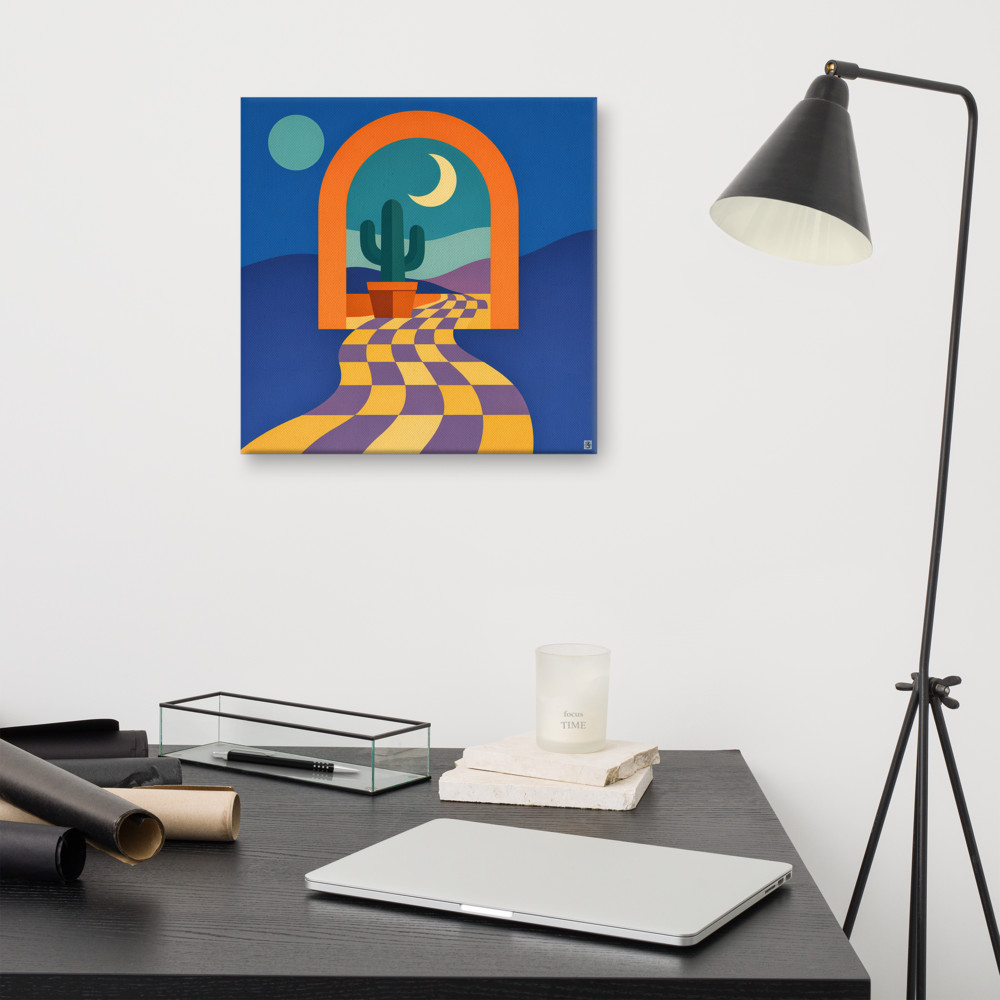
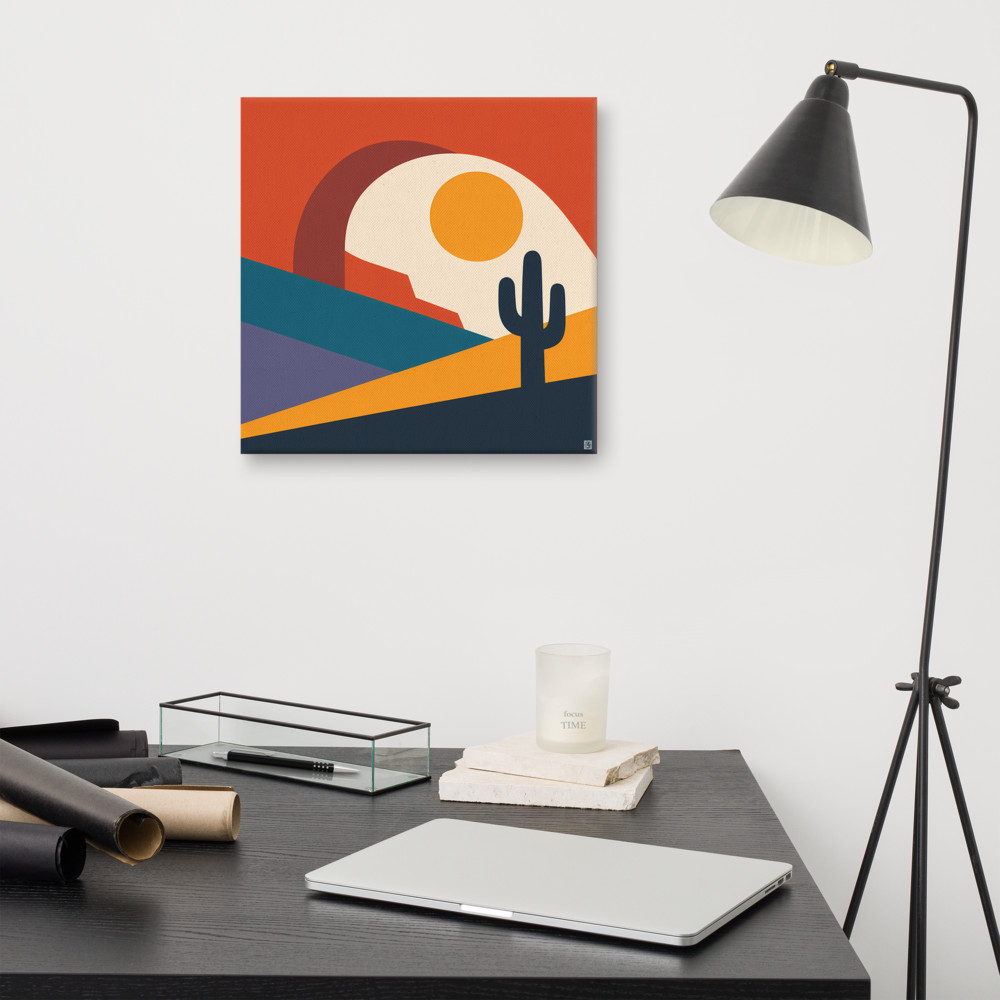
One genuinely useful habit: if you've got a piece hanging in a very bright room, rotate it. Swap it with something from a darker corridor or a bedroom every six months or so. It's a faff, but if you've got a couple of pieces you love — say a Dune Passage in the living room and a Mesa Quiet in the hall — trading them around means neither takes the full hit.
When to just accept the risk
Sometimes the wall that gets the most sun is the wall that most needs a picture on it. That's fine. Not everything on your walls needs to be treasured for a decade. If you're hanging something in a sunny kitchen because it makes the room feel right, and you know you'll probably want a change in three or four years anyway, don't tie yourself in knots over UV. Pick something you like, hang it, enjoy it, replace it when it's had its day.
Where I'd think harder is anywhere you're hanging a piece you consider part of the furniture — something you'd expect to still love in ten years. That's when the wall choice matters, that's when canvas earns its keep over paper, and that's when a sheer curtain stops being a design decision and starts being insurance.
Most fading happens quietly, in the background, while you're not looking. A bit of forethought about which wall, which material, and which window, and you'll barely have to think about it again.
Related articles
Mentioned in this article